
I came across a quote by E.O. Wilson who suggested, in his book, The Creation: An Appeal to Save Life on Earth, that scientists ought to “offer the hand of friendship” to religious leaders because “science and religion are two of the most potent forces on Earth and they should come together to save the creation.” I was almost hopeful that Wilson was suggesting a possible détente and that the Church had been forgiven by at least one secular humanist for its imprisonment of Galileo and the execution of Giordano Bruno…until I found a more recent New Scientist interview (1/21/2015) where Wilson observed that “Religion ‘is dragging us down’ and must be eliminated ‘for the sake of human progress'”. That’s no way to offer a hand of friendship.
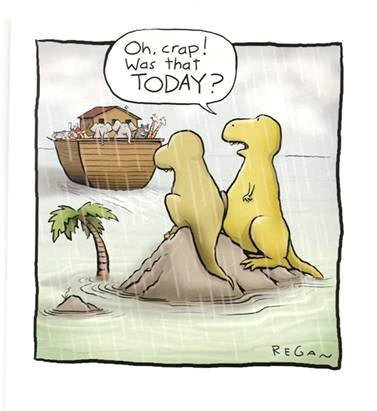
I support the notion that religious dogma in the extreme can be very dangerous. But I would also offer that the supreme embrace of reductionism by many in the scientific community is no less disturbing. I have to ask the question…how is it that the inflexible belief that Eve presented Adam with the fruit of knowledge or that Noah saved all 8 million animal (the dinos missed the boat) and 350 thousand vascular plant species is any different or more harmful than the arrogant presumption that ‘everything’ is or ought to be reduced to systems, particles, forces and interactions.
I would argue that both extremes are constrained by self-limiting convictions. Neither pole can capitulate to, nor is capable of a reproachmont with the other because of the tension between the two. Their life journeys are antithetical.
I’ve only just begun reading E.O. Wilson’s book, and I want to be careful. But my initial impression is that Wilson’s invitation to Religion is less than equitable. In his Letter to a Southern Baptist Pastor (Chapter 1) he establishes as a starting point that science and religion are on diametrically different Journeys with carefully delineated signposts that guide the traveller down each path.
“You are a literalist interpreter of Christian Holy Scripture. You reject the conclusion of science that mankind evolved from lower forms. You believe that each person’s soul is immortal, making this planet a way station to a second, eternal life. Salvation is assured those who are redeemed in Christ.”
“I am a secular humanist. I think existence is what we make of it as individuals. There is no guarantee of life after death, and heaven and hell are what we create for ourselves, on this planet. There is no other home. Humanity originated here by evolution from lower forms over millions of years.”
“For you, the glory of an unseen divinity; for me, the glory of the universe revealed at last. For you, the belief in God made flesh to save mankind; for me, the belief in Promethean fire seized to set men free. You have found your final truth; I am still searching.”
Establishing these boundary conditions for and the directions taken by each worldview invokes the imagery of Two roads diverg[ing] in a wood .

It’s the invitation, “Let us see, then, if we can, and you are willing, to meet on the near side of metaphysics in order to deal with the real world we share” that I find interesting as it seems to tap into the Journey metaphor in a way that possibly calls into question Wilsons stated intention to ’meet on common ground’. I’ve highlighted the ‘nearside of metaphysics’ to make the point…
But that’s for the next posting.
 Life's Lessons on a Road Less Travelled